

Like most utilities, Korea Western Power (KOWEPO) has traditionally relied on original equipment manufacturer (OEM) service agreements to maintain its fleet of gas turbines. Keeping its advanced gas turbines operating reliably is essential for Korea Western Power. The utility depends on advanced gas turbines—whose turbine inlet temperatures (TIT) exceed 1500°C—for 50 percent of its generation and expects that proportion will increase to 70 percent in the coming years.
Though it is a widely accepted industry approach, reliance on OEM service agreements had several significant downsides for Korea Western Power. One big challenge is cost: OEM service agreements are expensive. Another is logistical. Unlike their counterparts in Europe and North America, Asian utilities are often located far from OEM service hubs.
“For companies in Europe and North America, there’s probably a service depot that you can easily fly to and meet with people,” said Bobby Noble, senior program manager in EPRI’s gas turbine research and development (R&D) group. “Folks in Asia have a sense of isolation, especially with the OEMs based in the U.S. and Europe.”
Given its dependence on advanced gas turbines, Korea Western Power began exploring ways to reduce costs while increasing self-sufficiency in gas turbine maintenance. “They are highly motivated to try to bring every bit of capability they can in-house to improve resiliency, self-reliance, and cost,” Noble said.
Building on a Foundation of Knowledge
That motivation to handle as much gas turbine maintenance as possible in-house faced several challenges. Beyond the expense of launching an initiative to spearhead maintenance inside the utility, Korea Western Power also needed to ensure that its personnel had the knowledge and training to perform critical maintenance and upkeep.
EPRI was able to provide the practical knowledge Korea Western Power needed to begin gas turbine self-maintenance. Indeed, for years, EPRI had been developing and validating advanced repair techniques for gas turbine hot-section components. A gas turbine’s hot section is where fuel (typically natural gas) burns, producing extremely hot, high-pressure gases that drive the turbine section. Made up of a combustor—where fuel and air ignite—and turbine components such as vanes and buckets, the hot section is exposed to extreme temperatures and plays a critical role in gas turbine performance.
The collaboration drew on EPRI reports, including Advanced Repair F-Class Hot Section: Blade Platform Crack Welding and Gas Turbine Repair Technology: Advanced Thermal Barrier Coating Demonstration, and adapted their findings to the specific turbine models operating in Korea Western’s fleet.
One of the benefits of working with EPRI to develop repair procedures was that it would allow Korea Western Power to safely refurbish and return to service high-value blades, vanes, and combustor hardware rather than replace them at prescribed intervals, which is the standard approach recommended by OEMs.
A Unique Partnership
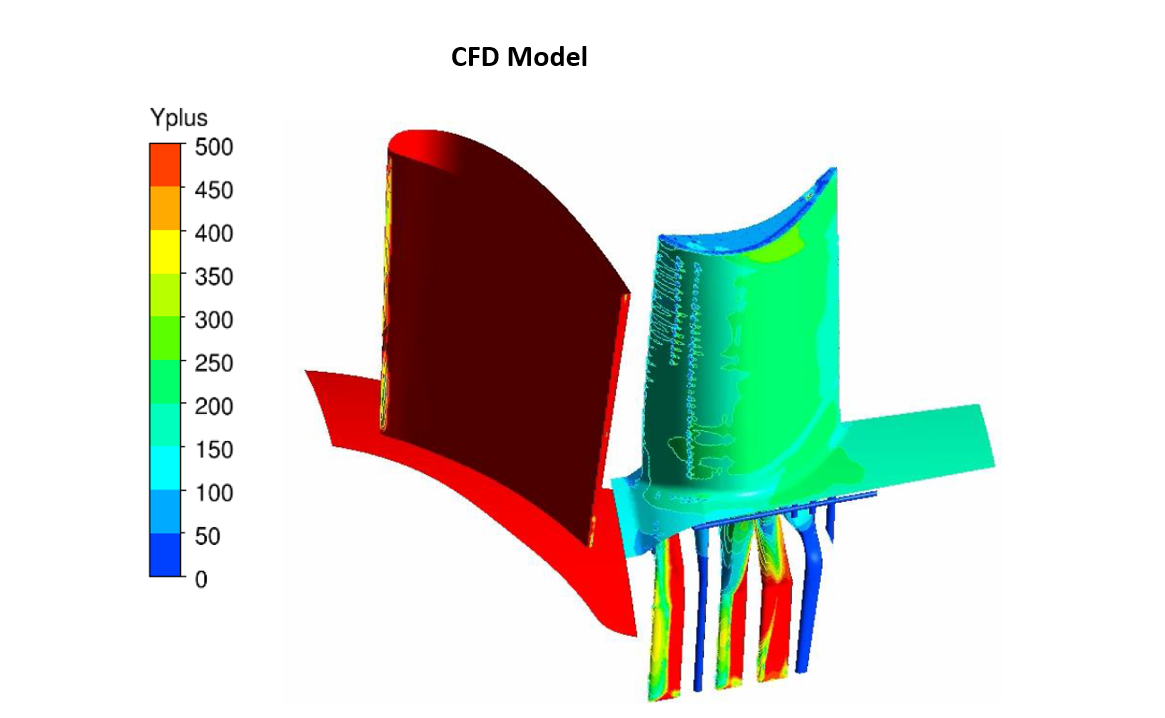
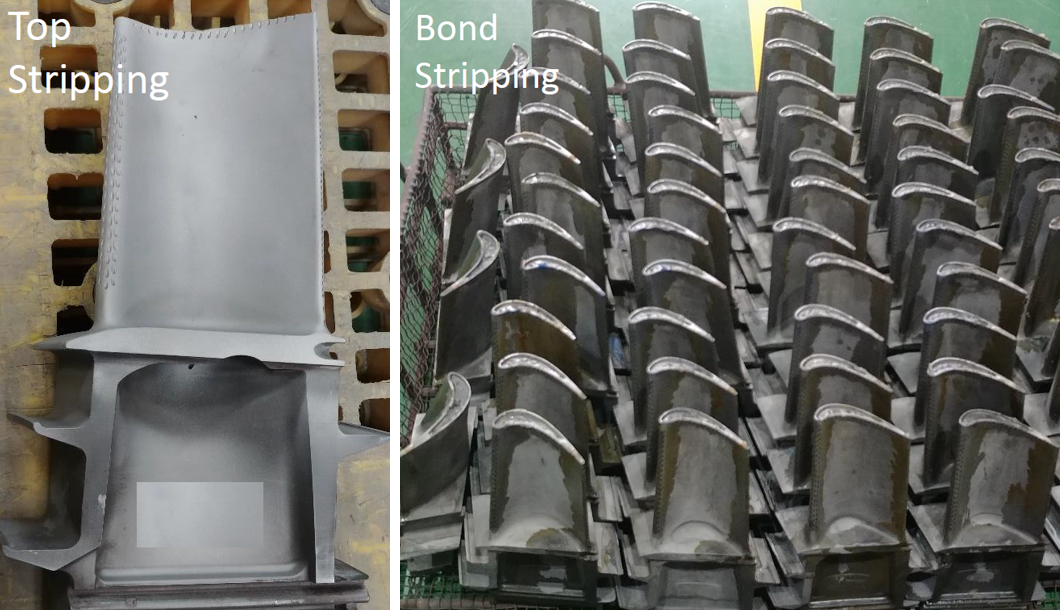
The collaboration between Korea Western Power and EPRI leveraged access to service run components to develop tailored repair procedures for the blades, vanes, and combustor designs commonly used in the utility’s natural gas plants. For instance, researchers paid close attention to a range of issues—from restoring protective coatings that prevent heat damage to keeping internal cooling passages clear to ensuring that welding and heat treatment processes could strengthen metal. The underlying goal was for repaired turbine parts to perform reliably once returned to service. As part of that process, EPRI set clear pass-fail standards for refurbished parts before they could be integrated back into turbines.
EPRI’s participation brought rigor and independence to an area traditionally dominated by OEMs. “No one else is really doing that in the industry,” said Alex Bridges, an EPRI senior team leader involved in the work. “EPRI has been the lead on developing repair guidelines, and some third-party service providers are now using them in their work with utilities.”
A Benefit to the Industry
Though EPRI collaborated directly with Korea Western Power, the intent of the work was never to develop repair guidelines that would only benefit one utility. Instead, it was about developing unit- and material-based guidance that could easily be applied to similar turbine designs. Put simply, the lessons learned at Korea Western Power were always meant to help other utilities operating comparable turbines.
The repair guidelines developed have proven to be effective. In 2023, for example, advanced turbine blades and combustion hardware were repaired using procedures developed by EPRI and Korea Western Power, and they were installed and put into normal operation. The result: the equivalent of more than 300 turbine starts during actual plant operation, without performance degradation.
In some cases, the repairs made improved component performance relative to new buckets. For example, Bridges pointed to repairs of first-stage turbine buckets—rotating blades that capture the energy of combustion gases to spin the turbine—made with advanced superalloys. By following improved heat treatment procedures developed by EPRI, the material properties of the buckets surpassed what they had been when originally manufactured. In fact, testing in EPRI laboratories demonstrated that the refurbished components had a longer expected life than new components.
Tangible Results and a Pathway Forward
Korea Western Power’s collaboration with EPRI has delivered financial and operational benefits. The shift away from OEM service agreements saved the utility approximately $1 million between June 2023 and June 2024. Over the longer term, cumulative savings are expected to exceed $10 million by 2030, representing a 30 percent reduction in maintenance costs across Korea Western Power’s gas turbine fleet.
The ability to perform repairs in Korea rather than coordinating with a geographically distant OEM service hub has also accelerated repair timelines. This improved responsiveness and flexibility allow the utility better to align maintenance schedules with the grid’s needs.
The collaboration between EPRI and Korea Western Power can also help other utilities. The combination of Korea Western Power’s access to components and field intelligence and feedback with EPRI’s research expertise bolsters repair knowledge and practical guidance in ways that would be difficult for any single organization to achieve. “This was an opportunity to pull bits and pieces of knowledge from across EPRI and Korea Western Power’s hands-on experience together to move repair capabilities forward,” Noble said.
EPRI is building on lessons learned from its work with Korea Western Power by conducting ongoing research into hot-section component failures across similar advanced turbines. The focus of the work, says Bridges, is to pinpoint the root causes that shorten component life and elevate replacement costs. Research findings will be used to refine repair strategies and operating practices that could reduce the possibility of damage happening in the first place.
By conducting neutral, third-party analyses rather than relying solely on OEM-led assessments, EPRI aims to help utilities better understand whether premature damage is driven by materials, operating conditions, upstream system issues, or interactions among those factors. Over time, EPRI expects that guidance to support a broader ecosystem of qualified third-party repair options, giving utilities more choice while maintaining rigorous technical standards.
Bridges said that work is already underway. “We’re looking at some specific failures on similar units and trying to understand what the root causes are,” he said. “In some cases, the hot section components are being damaged because of things happening upstream—like compressors running hotter than expected—which accelerates oxidation and ends up destroying vanes.”
For Korea Western Power, the immediate focus remains execution: scaling the new repair procedures across its fleet, qualifying additional components, and continuing to build in-house expertise. Over time, those capabilities could provide strategic leverage well beyond cost savings, enabling faster response to unexpected outages, greater control over maintenance planning, and more informed negotiations with service providers.
EPRI Technical Experts:
Bobby Noble and Alex Bridges
For more information, contact techexpert@eprijournal.com.
Banner Artwork: © EPRI, designed by Edge Design