

The first in a series of three articles about EPRI’s long-term commitment to the Japanese nuclear industry post-Fukushima examines the days and weeks after the 2011 tsunami.
Even 15 years later, Rosa Yang still vividly recalls sitting in her Tokyo hotel room, with her shoes and jacket by her bed in case she needed to evacuate quickly. Yang was in Japan’s capital one day after a tsunami triggered by the second most powerful earthquake ever recorded—the 9.0 magnitude Great East Japan earthquake—swept over Honshu Island, killing thousands of people and disabling three nuclear reactors at the Fukushima Daiichi power plant.
Just a day earlier, Yang had been thousands of miles away in her California home when she awoke on March 11, 2011, to news of the disaster. Whether it was fate or coincidence, Yang was scheduled to fly to Japan that same day to meet with some of the nation’s top nuclear officials, her first trip as EPRI’s new nuclear technical lead in Asia. Nobody would have protested if Yang had cancelled the long-planned trip. “With all the news, everybody told me not to go,” recalled Yang, a nuclear fuels expert who spent over three decades at EPRI before retiring as the first-ever female EPRI fellow.
Yang ignored the warnings and got on a plane to Tokyo, where she could still feel the frequent aftershocks of the massive quake. Obviously, Yang’s original itinerary to meet with a series of Japanese nuclear officials was scrapped. But she spent a week in Japan talking with people in the industry, including Shunichi Suzuki, the senior executive for Tokyo Electric Power Company’s (TEPCO) research and development (R&D)—the owners of Fukushima—trying to figure out how EPRI could help.
The Value of Being There
Yang’s presence made a big impression on the Japanese nuclear industry. “They remember people who helped them,” Yang said. “I can’t tell you how many notes I’ve gotten from senior people saying you were here when everybody else left.” Yang’s initial visit to Japan in the days and hours after the devastating earthquake and tsunami expanded a deep and long-term partnership—one that continues to this day—between EPRI and the nation’s nuclear industry.

Photo courtesy the Ministry of Land, Infrastructure, Transport and Tourism of Japan
The first in a three-part series, this story will examine how Yang’s initial trip kick-started several EPRI initiatives to help mitigate the immediate damage and to understand the events that led to the destruction of the three reactors. The following story will describe how EPRI helped ensure the reactors transitioned safely from active generation to a long period of layup, and how EPRI supported modernization efforts during that time. And the final story in the series will explore how EPRI has helped with reactor reopenings and life extension—work that has lessons for other nuclear power plants around the globe that are looking to operate longer than their original license periods.
In the aftermath of the tsunami, Japan shut down all 54 of its reactors to conduct safety reviews and establish new safety standards. The country also established the Nuclear Regulation Authority (NRA), an independent organization that assesses, reviews, and approves applications to restart reactor operations. A total of 15 reactors have restarted operations, including TEPCO’s Kashiwazaki-Kariwa plant in early 2026.
EPRI’s post-Fukushima engagement with the Japanese nuclear power industry touched many aspects of the crisis and its aftermath. EPRI’s depth of research on topics relevant to the challenges the nation’s nuclear power plant operators faced after the disaster helped guide deeply consequential decisions in the immediate aftermath and in the years since. The value of that research will be discussed in this series.
While Yang acknowledges those specific benefits, she is also quick to emphasize the unique and wide-ranging value that EPRI delivered at a time when Japan needed it most. “The whole Fukushima story really underscores the unique value of who EPRI is and why EPRI is critical for the whole nuclear industry,” Yang said. “Our collaborative model enables us to engage nuclear plant operators from around the world, build trust through our independence and objectivity, and then apply the best talent and best equipment to solve problems.”
The Cesium Crisis
Not long after Yang returned to the United States, she received an urgent call from TEPCO’s R&D head, Suzuki. TEPCO faced a pressing problem. Radioactive fission products, primarily cesium, were contaminating the cooling water faster than TEPCO could store it.
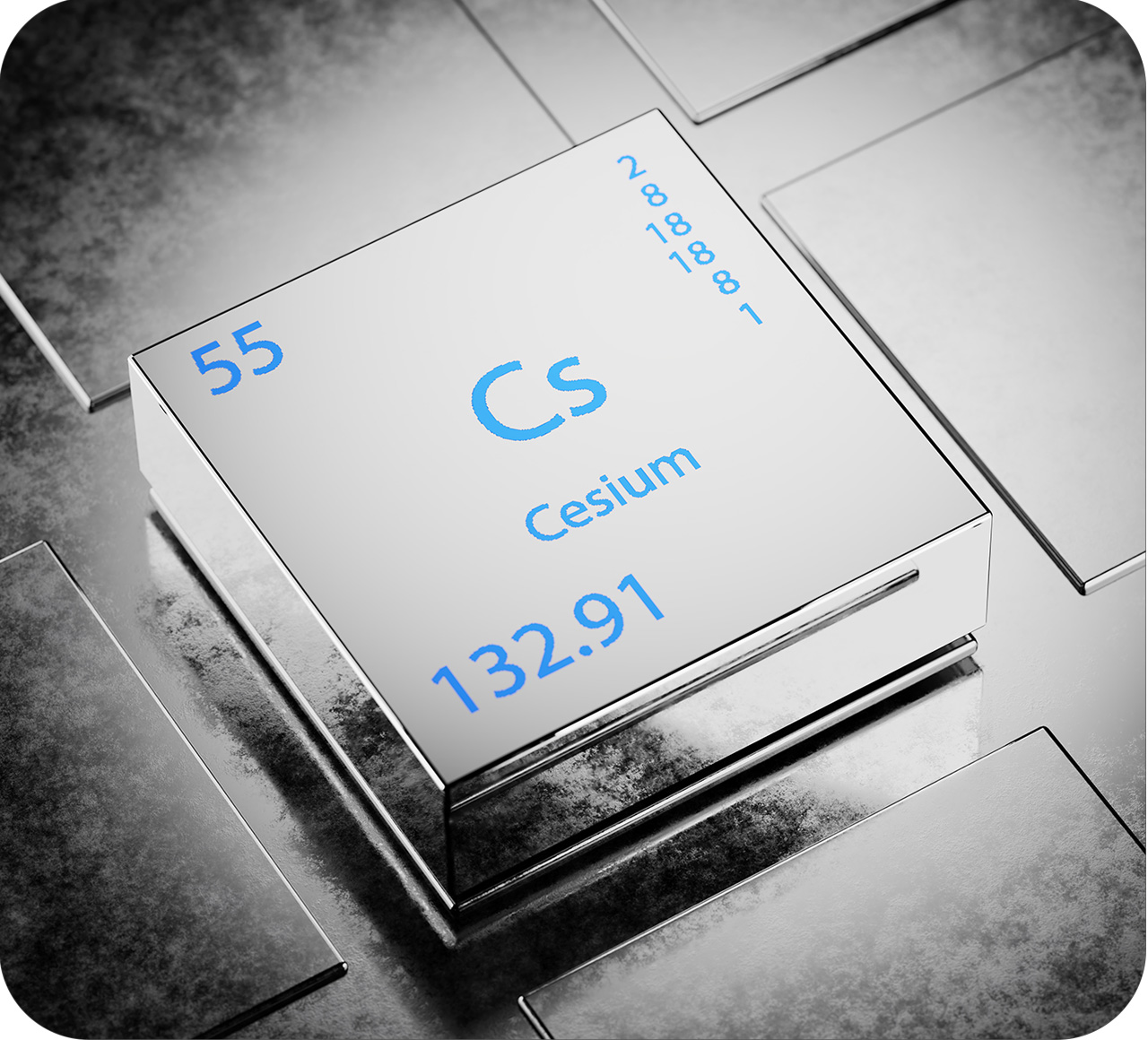
Suzuki explained that TEPCO needed a way to remove the cesium before the rainy season flooded the reactor basements and transported the contaminated water into the ocean. As a nuclear fuels expert, Yang immediately acknowledged what she didn’t know. “That’s not my area of expertise,” Yang thought. But Yang also remembered that a recently published EPRI technical report addressed exactly that problem.
Quickly, Yang connected with EPRI’s liquid waste processing and low-level waste management expert, Lisa Edwards, who had led the cesium removal research and served as program manager for radiation protection and low-level waste. Edwards recalls that EPRI members prompted the original research to analyze both the effectiveness of zeolites in removing highly radioactive cesium-137 from wastewater and the economics of their use.
Traditionally, resins are used to remove cesium-137 and other contaminants. Resins presented a critical problem at Fukushima, however: the site was saturated with salt water, both from the tsunami itself and from the emergency use of seawater as coolant when standard systems lost power. Saltwater renders resins ineffective. Zeolites, EPRI’s research has demonstrated, have no such limitation.
Resins rely on ion exchange based on electromagnetic attraction. By contrast, zeolites create a small physical structure that captures cesium molecules. “Zeolites work like a key lock mechanism that cesium molecules fit in perfectly. Something else may get captured in the cage, but if a cesium molecule comes along, it will push it out,” Edwards said. “It’s highly efficient, and the report confirmed that. It really fit the bill in terms of the challenges TEPCO was facing at the time.”
Shortly after a conference call with TEPCO, Edwards boarded a plane to Japan. She stayed for about 10 days and accompanied Suzuki to meetings evaluating potential solutions to wastewater contamination. It was an ideal role for EPRI. “We not only had recent research, but direct expertise that applied to their specific issues,” Edwards recalled. “We could act as their technical expert to evaluate different options, and they knew that we were coming at it without any vested interest. Our only agenda was their success, and they knew that.”
Edwards’ practical experience with radioactive waste processing also informed specific engineering recommendations. In normal nuclear plant operations, vessels containing spent removal media are periodically emptied by sluicing the radioactive material out into a separate container for disposal. At Fukushima, however, the cesium concentrations were so high that the spent zeolite inside each vessel would be intensely radioactive after capturing it. Edwards advised TEPCO to treat each vessel as its own disposal container—meaning that when a vessel was exhausted, workers could remotely disconnect and remove the entire unit and replace it with a fresh one, rather than attempting to move the highly radioactive material inside. This eliminated the risk of spills, clogs, or equipment failures while transferring material that, given the radiation levels involved, nobody could safely approach.
Beyond its expertise and research knowledge, EPRI also applied its extensive global network to identify the right solution provider to support TEPCO. Through her extensive work in the industry, Edwards was well acquainted with Kurion, a company that owned the patent for the cesium-specific zeolite (the same zeolite used during the Three Mile Island clean-up) TEPCO needed. Not only did Edwards, Yang, and EPRI’s country manager, Michio Matsuda, connect TEPCO and Kurion, EPRI also helped design the specific treatment approach used at Fukushima and helped kick-start the project. “We were able to survey the whole world to find the best people to do the work,” Yang said. “Very few companies have that kind of reach.” Recommending both a specific technology and a specific vendor was unusual for EPRI, but Yang felt the emergency justified the exception.
Kurion’s work with TEPCO was an enormous success. Over just a few months, before the rainy season began, Kurion removed more than 99.9 percent of the cesium, preventing significant ocean contamination.
Reading the Black Box

Photo Credit: Susanna Loof / IAEA
EPRI also helped TEPCO clarify the chain of events at Fukushima. Within hours of the accident, Fukushima lost all power, eliminating any possibility of collecting plant data. “Reconstructing what happened without that data was like trying to recreate a plane crash without a flight recorder,” Yang said.
EPRI turned to its Modular Accident Analysis Program (MAAP) to begin filling in those knowledge gaps—information that was needed to guide the immediate response and to inform future regulations and guidelines to enhance safety. Originally developed after the Three Mile Island accident in 1979, MAAP is a computer simulation tool that models the progression of events during a severe nuclear accident. MAAP is especially helpful for guiding decisions and actions during a crisis because it can run simulations faster than accidents unfold.
Because there was limited plant data from the critical early hours of the accident, EPRI used MAAP to help TEPCO understand what could be happening inside the damaged reactors, including the likely sequence of events and available response options. As new information emerged—such as equipment conditions, water injection volumes, and timing—EPRI updated its MAAP models to sharpen the picture.
MAAP helped estimate when the cores at Fukushima overheated and melted, when they reached the bottom of the reactor pressure vessel, and how much core material likely reached lower regions of the plant. MAAP simulations helped develop scenarios for the expected condition and approximate location of the core debris, which is vital information for safe response and recovery activities.
The insights MAAP generated had consequences far beyond Fukushima itself. EPRI used those findings to update the technical basis for Severe Accident Management Guidelines—the detailed emergency playbooks that nuclear plant operators worldwide consult when responding to a crisis. The updated guidelines addressed scenarios such as the extended power outages experienced at Fukushima, providing an improved resource that the global industry can use.
Fukushima also directly transformed MAAP’s future. The event revealed the need for enhanced capabilities in the MAAP code. The Japanese government stepped in to support the enhancements with several million dollars in funding, ensuring the tool that helped manage one accident would be far better equipped to help prevent or manage the next one.
Nearly all U.S. nuclear utilities use MAAP analyses to develop portable equipment plans—detailing how to deploy backup pumps and power supplies when permanent systems fail—that they submit to regulators. MAAP’s reach has grown substantially since Fukushima. Today, the software is used worldwide, and Japan’s nuclear utilities rely on it to evaluate plant safety as they seek government approval to restart their reactors. “All nuclear plants worldwide are safer today than before March 2011 because of all the lessons we have learned from Fukushima,” Yang said.
The Human Toll
The safety improvements MAAP helped drive were significant. Still, Yang believes EPRI’s most lasting contribution from those chaotic weeks was something harder to quantify—captured perhaps best in something Michio Matsuda, EPRI’s country manager, told her bluntly before the accident: nobody in Japan knows who EPRI is.
That changed dramatically after Fukushima, as EPRI’s role in supporting Japan’s nuclear industry spread quickly across the region. Before the accident, only two of Japan’s utilities—TEPCO and Chubu—were full EPRI members. Today, all but one of the nation’s 11 nuclear utilities have joined as full EPRI members. Even with all nuclear plants shut down and revenues severely strained, Japanese utilities continued to fund EPRI research programs—a demonstration, Yang believes, that the relationship had grown into something beyond a typical commercial arrangement. Awareness of EPRI also expanded across Asia, and Yang found herself being asked about what EPRI had done to help while visiting places like Korea and China.
A few years after the accident, Yang was also asked to serve on the International Expert Group (IEG), a global group of nuclear professionals formed to support the cleanup at Fukushima. “I told them I’m not a decommissioning expert, I’m a nuclear fuels expert,” Yang said. “But they said, ‘You have our best interest in mind. You are a friend; we want you on the committee.’”
Despite the decade and a half that has passed since the hectic and chaotic days after the accident, both Yang and Edwards have vivid memories of what it was like to be in Japan at the time. Edwards remembers being in a large conference room with 30 to 40 engineers whom TEPCO’s Suzuki had gathered to figure out how to accelerate radioactive waste cleanup. The discussions were deeply technical and intense, driven by an urgency to solve problems.
In the middle of a presentation, Suzuki stood up and said it was time to observe a moment of silence to mark the anniversary of the tsunami. Edwards had been absorbed in the technical discussion, looking down at her notes. “We had been working together, and it had all been very technical, and everyone had been very stoic,” Edwards said. “I looked up, and many of the faces were still stoic, but I could see tears rolling down their cheeks. In that moment, the enormous emotional toll these people were laboring under, and how many of them had lost friends and family to the tsunami or didn’t know their status, really hit me. It was a defining moment that has never left me.”
EPRI Technical Experts:
Lisa Edwards and Rosa Yang
For more information, contact techexpert@eprijournal.com.