

Judging by the numbers alone, the rollout of advanced metering infrastructure (AMI) has been an undeniable success.
Utilities such as Pacific Gas & Electric (PG&E) and Florida Power & Light (FP&L) were among the first to launch ambitious smart meter deployments in the mid- to late 2000s. It was the beginning of a shift away from analog meters, quickly and enthusiastically followed by utilities across America—and accelerated by billions in grid modernization funding from the American Recovery and Reinvestment Act (ARRA) in 2009.
Today, it’s more likely that homes and businesses have smart meters than don’t. A recent report by the Federal Energy Regulatory Commission (FERC) found that nearly 77 percent of all meters across residential, commercial, and industrial customers are now AMI, totaling nearly 130 million meters.
It’s understandable why utilities have been so eager to embrace AMI. Smart meters that can transmit consumption data eliminate the need for manual meter reads, saving operational costs and reducing truck rolls. Smart meter deployments have also delivered on other early promises, including improved billing accuracy and quicker outage detection, which accelerate restoration efforts.
While these operational gains have been real, many of the transformative promises of AMI have gone largely unrealized. In fact, despite billions invested and near-universal deployment of smart meters, a recent EPRI survey found that more than 60 percent of utilities are still primarily using their smart meters for billing and outage alerts. These uses deliver genuine value, but they are not nearly as transformative as some of the early promises of dramatic reduction in peak demand, robust customer engagement, and dynamic pricing.
That gap is prompting hard questions, especially now that many of the original smart meters are approaching the end of life and utilities are considering whether to invest in new AMI systems. “We are seeing this next generation of metering systems, call it AMI 2.0, that include some really advanced capabilities,” said Matt Wakefield, EPRI’s director of Information Communication and Cyber Security (ICCS). “Utilities are asking whether it’s worth investing in this next generation of AMI and, if so, how to actually unlock its value. That means addressing integration, interoperability, and organizational alignment, not just buying better meters.”
The Value Gap
EPRI recently launched the three-year initiative, NextWave AMI: Unlocking the Full Value of AMI, to drive industry collaboration and answer these hard questions, helping utilities achieve the full potential of smart meters. To guide the project’s research agenda and priorities, it began by surveying 99 global utilities and technology providers. The survey sought to understand how utilities are using AMI today, what challenges prevent them from doing more, and the future capabilities and use cases they prioritize.
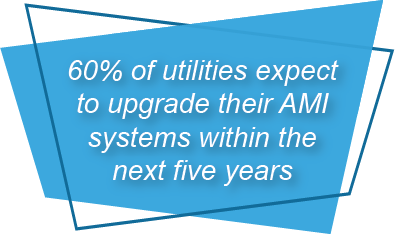
The survey results underscored the basic insight behind the initiative, that utilities face an inflection point and are determined to fully leverage the capabilities of smart meters. For example, over 60 percent of utilities expect to upgrade their AMI systems within the next five years. Given that AMI deployments cost hundreds of millions, even billions, a clear understanding of what prevented the most transformative smart meter capabilities from becoming a reality is necessary.
Technical and Institutional Barriers
The survey found that some of the obstacles are well-known technical challenges. The most frequently cited constraint preventing utilities from tapping the full value of existing smart meters was limited integration with other utility systems, including distribution management systems (DMS), outage management systems (OMS), and geographic information systems (GIS). Another technical challenge limiting the impact of smart meters was the lack of real-time data access, cited by 43 percent of utilities. This is the result of AMI systems being designed to transmit data once or just a few times a day, which is adequate for billing but not nearly as frequent as needed to manage a complex grid.
The obstacles preventing utilities from capturing the full value of AMI are not purely technical. “There’s a cultural challenge as much as a technical one,” Wakefield said. “The metering operations groups own the systems, but they’re not responsible for delivering advanced distribution or grid-facing capabilities. Without strategic executive leadership visibility and cross-functional ownership, those capabilities simply don’t get pursued.”
A Changed Grid
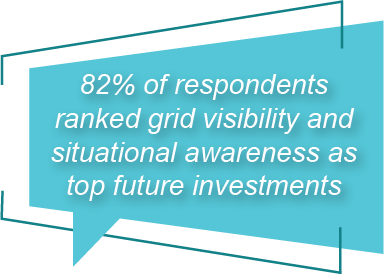
The survey suggests this is changing. For example, 82 percent of respondents ranked grid visibility and situational awareness as their top future investment priorities. This prioritization reflects how much the grid has changed in the years since smart meters were first deployed. Not only are utilities keen to manage the real-time complexity of a grid that includes far more intermittent renewable generation and bidirectional power flows from distributed energy resources (DERs), but they are also navigating rapid load growth from data centers powering artificial intelligence (AI) applications.
Given the ongoing transformation of the grid, it is not surprising that utilities find the specific capabilities of the latest AMI iterations especially attractive. For example, distributed or edge intelligence is the ability to run applications directly on the meter. These applications could include things like fault detection, real-time load management, and EV charging analysis. With the right smart meter hardware and software, the underlying infrastructure unlocks multiple benefits. “Utilities see it the way you might think about apps on your phone. You may not know exactly what your most important app will be two years from now, but you want a platform to be able to add them as you need them,” Wakefield said.
Assembling Evidence, Sharing Knowledge
Utilities understand the potential value AMI 2.0 can deliver, a value that appears uniquely suited to the challenges and opportunities facing the grid today. But it’s also clear that utilities don’t want to repeat the past, when large investments in smart meters failed to unlock their most advanced capabilities.
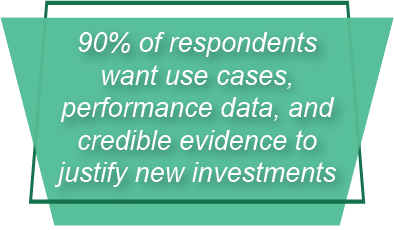
This helps explain why 90 percent of survey respondents said they want validated use cases, real-world performance data, and credible evidence they can bring to regulators and utility leaders to justify new investments.
The NextWave AMI initiative aims to provide the rigorous, collaborative research needed for utilities to understand what AMI can deliver, what challenges need to be overcome to secure that value, and the confidence to make investments and engage with regulators. “Technology providers can point to compelling use cases, but utilities and regulators understandably want independent validation,” Wakefield said. “If EPRI can provide that unbiased, evidence-based perspective, it adds a level of credibility that really matters, especially when those investments are under regulatory scrutiny.”
In other words, the NextWave AMI initiative embodies EPRI’s traditional role, focusing on independent research, shared knowledge, and serving as an industry convener. In this case, NextWave AMI will pursue its work across three interconnected areas. The top priority is to assemble a comprehensive library of use cases and case studies that cover both legacy AMI deployments and emerging capabilities.
The use cases are instructive because they describe potential AMI capabilities and the technical requirements to achieve them, while utility deployments illustrate best practices and real-world mistakes. Both are important when considering significant new investments. “It’s not just about technical requirements or cost-benefit analysis,” Wakefield said. “Utilities really want to know: what actually happened in the field? What worked, what didn’t, and what would you do differently?”
The library will mirror AMI’s broad capabilities. For example, operational use cases will include fault detection and location, transformer loading analysis, and momentary outage tracking. Customer-focused use cases include EV charging analysis, appliance-level energy disaggregation, and rate plan optimization. The library will also feature emerging AMI 2.0 capabilities, such as DER visibility, integration with advanced distribution management systems (ADMS), and sub-second telemetry to support grid operations.
An initial version of the library is expected to be available to project participants this spring. The ultimate goal is to have a library with hundreds of use cases and case studies that is AI-searchable. This would provide utility engineers with a valuable tool for answering a wide range of specific AMI planning and operational questions.
Frameworks for Success
Another NextWave AMI area of focus will address some of the foundational issues that have prevented utilities from getting the most out of past AMI deployments. To do that, the initiative will develop reference architectures, blueprints for transitioning from legacy systems, and cybersecurity and communications requirements. More immediately helpful will be a meter failure database that will help utilities understand failure trends and rates in their current AMI deployments, providing visibility that will guide decisions about smart meter replacements.
Utilities considering AMI replacements will face regulatory scrutiny, a process that demands a data-driven assessment of the actual value of smart meters. The challenge to quantifying that value is that the same AMI platform can deliver multiple benefits. “If you’re looking at a single use case like fault detection, it may be hard to justify on its own,” Wakefield said. “But if that same capability also enables EV detection and load disaggregation, that combined value looks very different.”
NextWave AMI will develop cost-benefit analysis tools that capture the holistic benefits of AMI investments. The initiative will also build guidelines and evaluation metrics that utilities can use in their AMI field demonstrations. This will help ensure the industry has a consistent methodology for reporting results to regulators and utility executives weighing new investments.
Many utilities face big decisions about what comes next for smart meters, decisions that could make the grid more manageable, visible, and efficient. But the investments needed to fully leverage AMI are hardly insignificant, especially at a time when affordability is a top concern. NextWave AMI doesn’t seek to make those decisions for utilities. But it aims to provide both the evidence and the collective industry knowledge needed to make decisions that best support the grid and serve customers.
EPRI Technical Expert
Matt Wakefield
For more information, contact techexpert@eprijournal.com.
Learn More
- NextWave AMI: Riding the Current, Powering the Future – Maximizing AMI Now and for the Future—Supplemental Project
- EPRI Next Generation AMI Webcast – Industry Survey Results and Action Plan webcast presentation and recording. The Launch of the NextWave AMI Project
Banner image created by EPRI