

As a significant number of Japan’s nuclear power plants come back online after the Great East Japan Earthquake of 2011, EPRI research and experience were instrumental in supporting the safe and continued operations of these units for many decades to come.
The final story in a series of three articles about EPRI’s long-term commitment to the Japanese nuclear industry post-Fukushima looks at how to safely and effectively extend the lives of plants returning to service.
On a cool, mostly clear October evening in 2024, Japan’s nuclear power industry took a symbolically important step forward. At 7 p.m., Tohoku Electric Power Company’s Onagawa unit 2 restarted in the nation’s northeastern Miyagi Prefecture.
Onagawa Unit 2 was not the first reactor to resume operations after the March 2011 earthquake and tsunami, whose floodwaters disabled power and cooling at the Fukushima Daiichi site, triggering a reactor core meltdown in multiple units. But its restart had particular significance. It was the first boiling water reactor (BWR), similar to the 6 units at Fukushima Daiichi, to come back online since Japan shut down its entire fleet of 54 reactors for inspections, safety tests, and a complete regulatory overhaul after the earthquake and tsunami.
Onagawa, in particular, sits closer to the epicenter of the 2011 earthquake than any other nuclear plant in the country. Its restart is part of a bigger, still unfolding story of renewal for the Japanese nuclear power industry, one that has involved both an extraordinary amount of collaborative research and planning and a fundamental reconsideration of how to address risk and how long reactors can operate safely and effectively.
Taking the Long View
To reach a point where it’s possible to think, plan, and act in ways that support a crucial long-term role for nuclear in meeting Japan’s electricity needs is a genuine accomplishment. The first article of this three-part series about EPRI’s engagement with Japan’s nuclear industry after the earthquake and tsunami chronicled how EPRI provided immediate support to aid the emergency response of plant operators, utilities, and regulators.
The second story examined how EPRI assisted plant modernization initiatives during the years when reactors were not generating electricity, as Japan revamped its regulatory approach and required plants to undergo extensive safety testing. This final story describes how EPRI is helping Japan’s utilities go beyond just restarting: operating these plants safely and efficiently for decades longer than originally licensed for (Japan originally licensed nuclear power plants to operate for 40 years, similar to other countries worldwide).
There are 15 reactors currently operating, and several others are either approved to restart or under regulatory review. Following the 2011 events, many of these reactors spent nearly a decade of their original license period offline, without generating the electricity they were designed to produce. Now, with the government aiming to have nuclear power provide over 20 percent of Japan’s electricity generation by 2040 and allowing reactors to operate beyond 60 years, the nation’s utilities have had to think hard about what is required to produce electricity on timelines beyond those envisioned when the plants were originally built.
“Many of these plants have come back online,” said Randy Stark, director of materials R&D within the nuclear sector at EPRI. “Now the focus is how can they extend these plants and get 10, 20, 30, 40 more years out of them?” EPRI’s engagement with Japan’s nuclear industry on that question spans two broad areas: the materials science and aging management work needed to make the technical case for long-term operation, and the risk-informed decision making that can help utilities run their plants more safely and efficiently every day for decades to come.
Making the Case for a Much Longer Life
Extending the life of any physical asset, whether a home, a car, or a power plant, has its challenges. Parts and components naturally degrade over time, both through use and from exposure to heat, cold, wind, and other environmental and operational conditions.

A nuclear power plant is not just any physical asset. Nuclear plants contain electrical, coolant, spent fuel, control, instrumentation, and other systems. Plants also have an enormous number of individual components, from reactor pressure vessels, steam generators, coolant pumps, electrical cables, and miles of piping. These components are exposed to a unique combination of physical stresses and environmental conditions, like intense neutron radiation that can embrittle steel over time, high temperatures and pressures that can weaken welds and pipes, physical loads, and water chemistry that can be harmful to metal surfaces.
The impact of normal operations on nuclear systems and components is well understood for traditional plant lifetimes of 40 years, and regulations, inspections, repairs, and maintenance have reflected the expectation that plants would operate for about four decades. With Japan and many other nations extending the licenses of existing power plants, a range of new questions about component durability and necessary inspections arises. At a very basic level, the question is the same for each component and system: can the physical systems that enable plants to generate electricity operate safely and efficiently for a period beyond the timeline their designers originally planned?
EPRI researchers have been seeking answers to the many variations of that question for decades. EPRI has worked collaboratively with U.S. utilities and the U.S. Nuclear Regulatory Commission (NRC) to develop aging management guidance for plants seeking to operate well beyond their original license terms. The research is comprehensive and includes a full range of components and materials in a nuclear power plant, including the durability of concrete structures, electric cables, underground pipes, and reactor pressure vessels. The NRC has reviewed technical guidance produced by EPRI in these and other areas and, in many cases, secured regulatory approval for aging management approaches to support plants operating for 80 years. In fact, the NRC has already granted licenses to allow 25 reactors at 13 plants to operate for up to 80 years.
Japanese utilities are eager to take advantage of existing research on extending reactor lifespans and tailor it to their own regulations and operating conditions. For example, every nuclear plant in Japan has joined EPRI’s Materials Reliability Program and Boiling Water Reactor Vessel and Internals Project to access the technical basis developed over several decades. “Every plant in Japan signed up to become members of EPRI so that they could get access to our technical bases that would allow them to move beyond their current time horizon,” Stark said.
EPRI has supported the Japanese industry in several specific ways. For example, EPRI developed a series of reports to address gaps Japan’s nuclear power plant owners identified about operating for more than 60 years. The reports highlighted lessons from the U.S. nuclear industry. They addressed questions such as whether cracks in the internal components of a boiling water reactor could lead to coolant leaks over an extended operational lifetime. Another report provided methods for assessing the long-term condition of the core shroud, the large cylindrical structure surrounding the reactor fuel. A third report provided a technical justification for reducing the frequency and scope of reactor pressure vessel inspections. It explained that this reduction does not compromise safety for longer-operating power plants.
Nevertheless, research and guidance in one country do not automatically translate to another country, given country-specific supply chains, standards, and expectations. But this is an evolving area, and regulators, utilities, and other stakeholders in Japan are working together to chart a course forward that includes extending the life of nuclear reactors. EPRI’s research and experience are helping to inform that ongoing conversation. The inspection of reactor vessel welds is an active topic of conversation between EPRI and Japanese regulators.
Japan’s Nuclear Regulation Authority requires complete inspections of full-penetration reactor vessel welds. Nathan Palm, a program manager who leads EPRI’s Boiling Water Reactor Vessel and Internals Project, says the requirement is more rigorous than has traditionally been required in Japan, especially regarding circumferential welds. It is also not the practice to inspect circumferential welds in the U.S. Circumferential welds are horizontal seams that join sections of the reactor pressure vessel together. The requirement to inspect these welds is expensive, Palm says, and can make cost-effective long-term operation challenging, especially given the large post-Fukushima investments utilities have made in safety upgrades.
Palm and his colleagues have been collaborating with Japanese utilities to develop a technical case for a different approach. The alternative approach is based on probabilistic fracture mechanics. This method leverages materials science and statistical analysis to calculate the likelihood that a weld defect will result in a serious problem. Decades of research and actual operating experience at U.S. nuclear power plants have convinced the U.S. NRC that the probability that these welds will fail in a manner that would threaten reactor safety is very low. As a result, technically demanding, time-consuming, and expensive routine inspections that expose workers to radiation are not required. EPRI has engaged directly with Japanese regulators, and the conversation is ongoing.
A New Approach to Risk
There are many reasons why Japan wants to extend the life of its nuclear power plants. As in other nations, data centers are driving load growth in Japan, with Wood Mackenzie projecting that they will account for 60 percent of load growth by 2034. Besides data centers, the electrification of transportation and other sectors, as well as semiconductor manufacturing, are also contributing to increased electricity demand.
The desire to extend the licenses of nuclear power plants is also being driven by energy security concerns and Japan’s decarbonization goals. Japan is one of the most energy-import-dependent economies in the world, producing only about 15 percent of the primary energy it needs domestically.
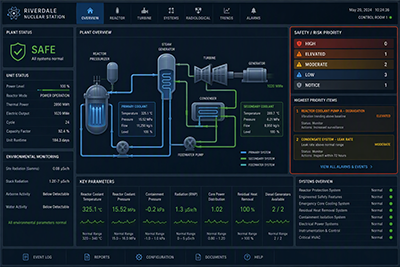
Long-term operation demands more than confidence in a plant’s materials and components and the inspection regimes that monitor them. In the aftermath of the Fukushima Daiichi Accident, Japan is expected to reevaluate the best approach to assessing and managing risk.
Rather than planning only for worst-case scenarios, probabilistic risk assessments use data and statistical analysis to help nuclear power plant operators understand which risks are most significant, so they can focus their time and resources on addressing them. Put simply, probabilistic risk assessments move away from applying the same level of scrutiny to every component and activity, regardless of their impact on safety, and instead prioritize the resources where they matter most, while still accounting for defense-in-depth and sufficient margins for nuclear reactor operations.
Probabilistic risk assessment capabilities existed before 2011, but had not been widely adopted in Japan. Since then, the nuclear industry has moved toward a more sustained engagement with risk-informed approaches. EPRI has been working with utilities for more than a decade to support the adoption of these practices.
This has included regular visits to Japan to share guidance on topics including online maintenance and configuration risk management, which uses real-time analysis to assess the safety implications of taking equipment offline for maintenance. Fernando Ferrante, Program Manager for EPRI’s Risk and Safety Management program, has long been part of this engagement and has observed a shift in the questions he fields. “Before, there was a lot of ‘what is risk-informing, where is the guidance, how will I use this?'” Ferrante said. “Now, the questions are very refined and focused on specific implementation aspects of risk models.”
It’s a notable shift, not just driven by regulatory mandates but by the belief that adopting a risk-informed approach is an effective way to continuously improve plant safety and efficiency. Rob Austin leads EPRI’s Plant Modernization and Artificial Intelligence initiative and has spent significant time working with Japanese utilities and plant operators. He says adopting risk-informed practices meshes well with a concept very familiar to Japanese business culture. “Risk-informed is very kaizen,” he said. “It’s all about eliminating waste, eliminating things that don’t give you benefits, and focusing attention where it most helps ensure safety.”
The rest of the global nuclear industry stands to benefit as Japan continues to develop its own approach to risk. “Japan has the capability to not just learn from others, but to eventually lead in this field so others can learn from them,” Ferrante said. “They’re getting to the point where they’re asking hard questions that can push the limits of risk assessment beyond current practices in a positive direction.” For Ferrante, the possibility that Japan’s approach to risk-informed decision-making could eventually yield insights that benefit the global nuclear industry is one of the more interesting dimensions of a relationship that has now spanned 15 years. Ferrante concluded with: “I have the deepest respect for all our colleagues in Japan, and I am honored to be a part of their journey into risk-informing. This is one of the most rewarding aspects of my career at EPRI.”
A lot has changed in the 15 years since the Fukushima Daiichi Accident. Japan’s regulatory approach has been reimagined, plants have been modernized and upgraded to ensure safety for decades to come, and the nation’s need for nuclear power has only become clearer. What hasn’t changed is EPRI’s commitment to support the nation’s industry, especially as it begins to write its next chapter. “We want them to run these plants safely, reliably, and affordably for another 40 plus years,” Stark said. “EPRI is here to help do that.”
EPRI Technical Experts:
Rob Austin, Fernando Ferrante, Nathan Palm, and Randy Stark
For more information, contact techexpert@eprijournal.com.